AI-Optimized Design Automation and Quantum-Inspired Secure VLSI Architectures for Edge and Autonomous Computing
DOI:
https://doi.org/10.31838/JCVS/07.02.07Keywords:
AI-driven EDA, Quantum-inspired VLSI, Hardware Security, Edge Computing, Autonomous Systems, Design Space Optimization, Low-power ArchitectureAbstract
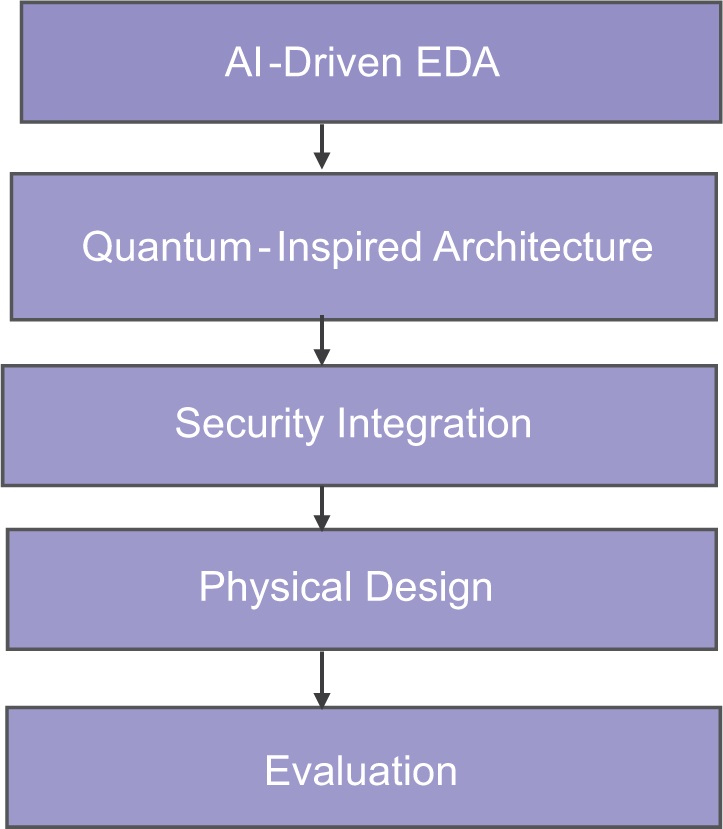
The high rate of growth of edge systems and autonomous systems requires real-time optimised, energy efficient and secure hardware architectures. The conventional VLSI design flows cannot accommodate such requirements because design complexity is on the rise, security threats are increasing, and also, high performance computing has to be done under stringent power limitations. A unified system of AI-based design automation, quantum-inspired logic optimization, and hardware security co-design of next-generation VLSI systems is described in this paper. The suggested approach allows the study of design space faster, increases the security level, and minimises power and delay, as well as, optimises the workload performance of edge and autonomous applications. The experiments show that there is a considerable improvement in the PPA (Power, Performance, Area), attack resistance and inference efficiency. The methodology is close to the current tendencies of VLSI and moves towards real-life applicability of secure and optimised architectures towards embedded intelligence.
Published
How to Cite
Issue
Section